Xinjiang is well known for its beautiful melodies and the art of dances. All the nationalities who have been living in Xinjiang for centuries, would enjoy themselves singing and dancing not only during the holidays or festivals, but also on the regular days of their life. Dombura of Kazakhs, Kyrghyz Kumyz, Tajik flute, multi-stringed bowed instrument of Mongols, which is beautifully called “ma tou qin”(instrument with a figure of horse head)in Chinese, mandalin and bayan of Tatars and Rus-sians, etc. are all distinguish themselves not only for their tone, but also with ingenious structure and exquisite art of designs. “Twelve Mukam” are especially well known in the world with musical instruments. Numerous records on Uyghur music and musical instruments can be found in Chinese historical documents of Han, Sui and Tang dynasties. Upon the changes of many centuries,still over 40 types of musical instruments are being used in modern days. According to its structure and the way of performance, instruments can be divided into the following four categories: 1. band instruments, as flute, horn trumpet, sunai, karnai, kuwuz,etc.;2. plucked string instruments, as kamancha, barbap, Kashgar rawab,dolan rawab, rawab, tambur, dutar, kalun, chang, etc.;3.bowed string instruments, as satar, ghijak, Kumul ghijak,hushtar,etc.;4. percussion instruments, as naghra, dap, sapay, koshuk, tash, jarla, dumdap, sapalchula and more.
Here are the main ones among them are introduced below.
Ghijak
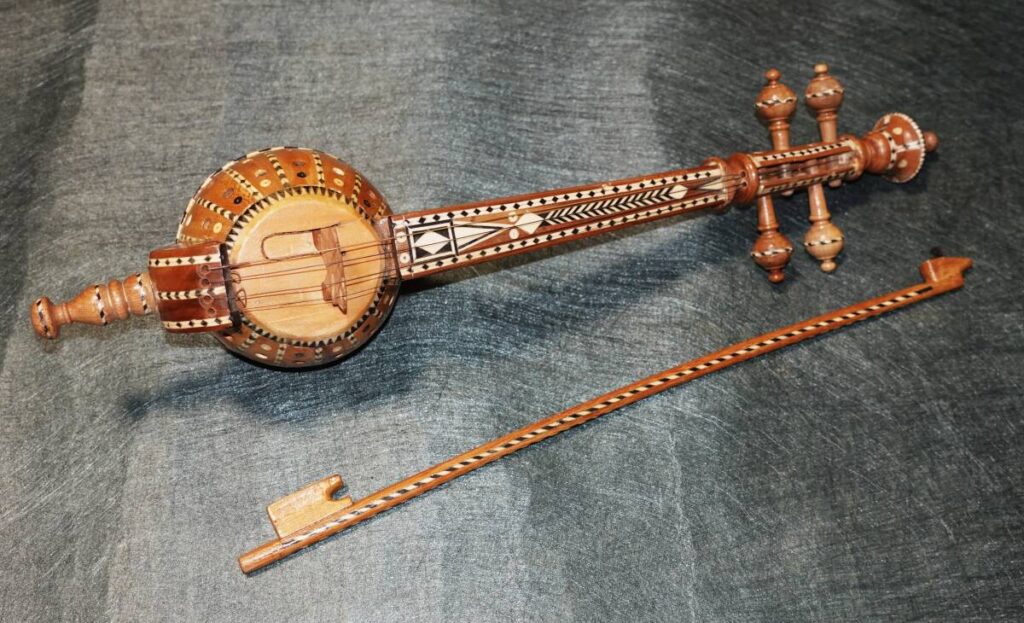
Ghijak is one of the traditional Uighur instruments with a very long history. It is usually made of walnut, mulberry, apricot, or phoenix wood; the surface is covered with snake skin. On the back part of bowl shaped head, there are many small holes for the purpose of the best resonance of the tone. The entire instrument is beautifully decorated.
Hushtar
Hushtar has been developed on the basis of ancient ghijak. The structure of this instrument is similar to that of chaplima rawab, but the surface is covered with wood chip instead of snake skin. It has four strings .It is played like ghijak.
Rawab
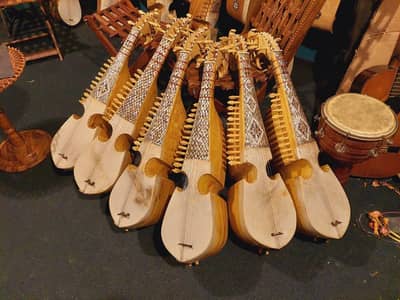
This is a very common instrument,easy to learn and easy to play.The head of rawab is covered with a stretched snake skin;at the connection of the head and handle there are two decorative projecting parts in the shape of ram horn,which add particular color of beauty to the instrument. The instrument is usually made of walnut wood,apricot wood or phoenix wood. There are kashgar rawab, dolan rawab, shepherd’s rawab, which represents the most ancient type, newer improved type-chaplima rawab(also called tala rawab), contrabass rawab,etc.different types of it. The strings for rawab are used to be made of intestine of sheep in old days,but now steel strings are used instead.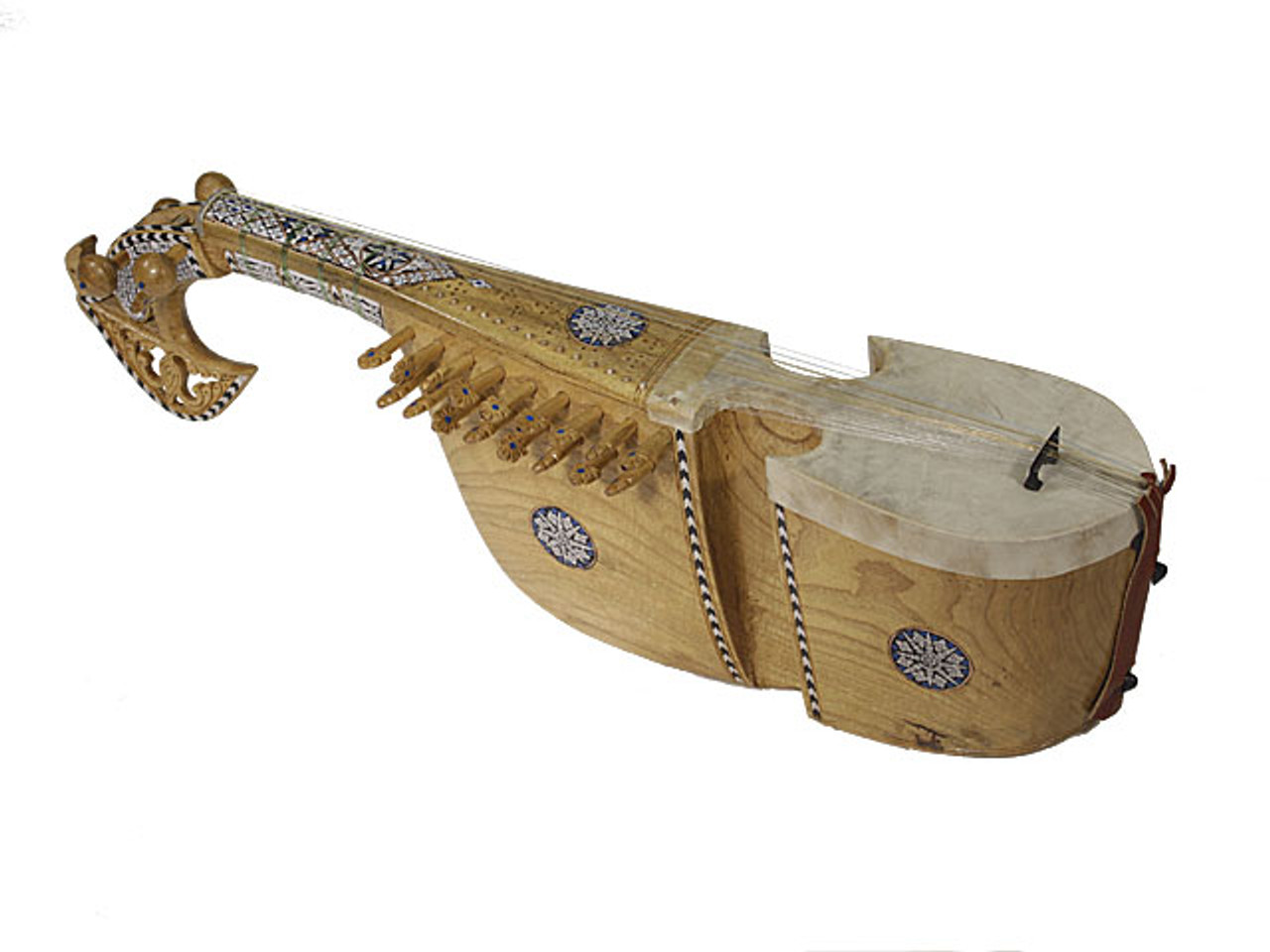
Dutar
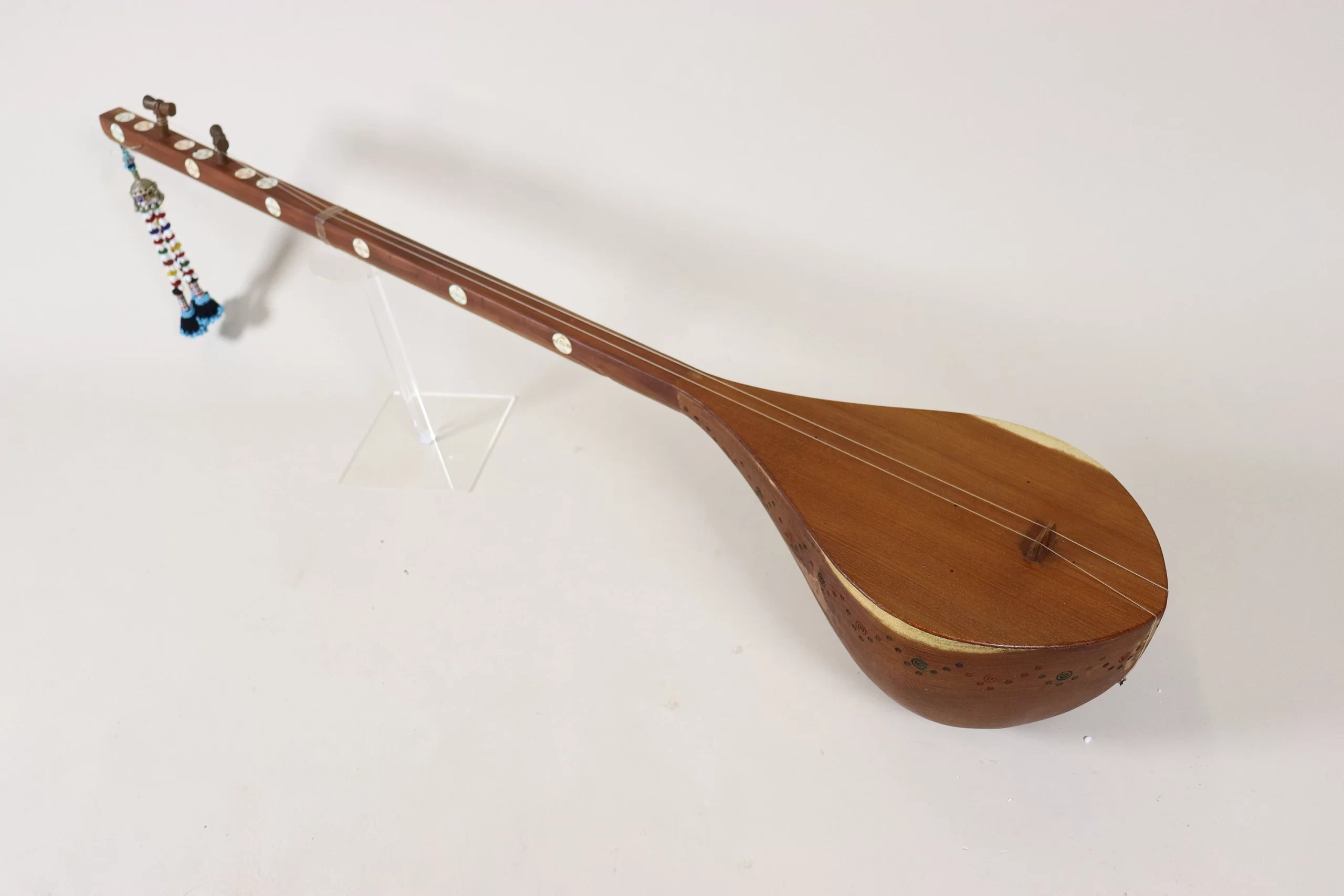
Dutar has comparatively longer history among musical instruments.It is also one of the most common instrument loved and honored by all ages and gender. Dutar also plays important role in inspiring musical emotion of the people.The length of Dutar usually is about 130 cm. Its head is round -backed and big in a half cut pear shape,which is usually made of mulberry strips;the flat face of it is made of thin mulberry plank. It has two strings made of animal intestines or silk. It is played with the round head put on the leg and directly plucked on the string with fingers.Tanbur
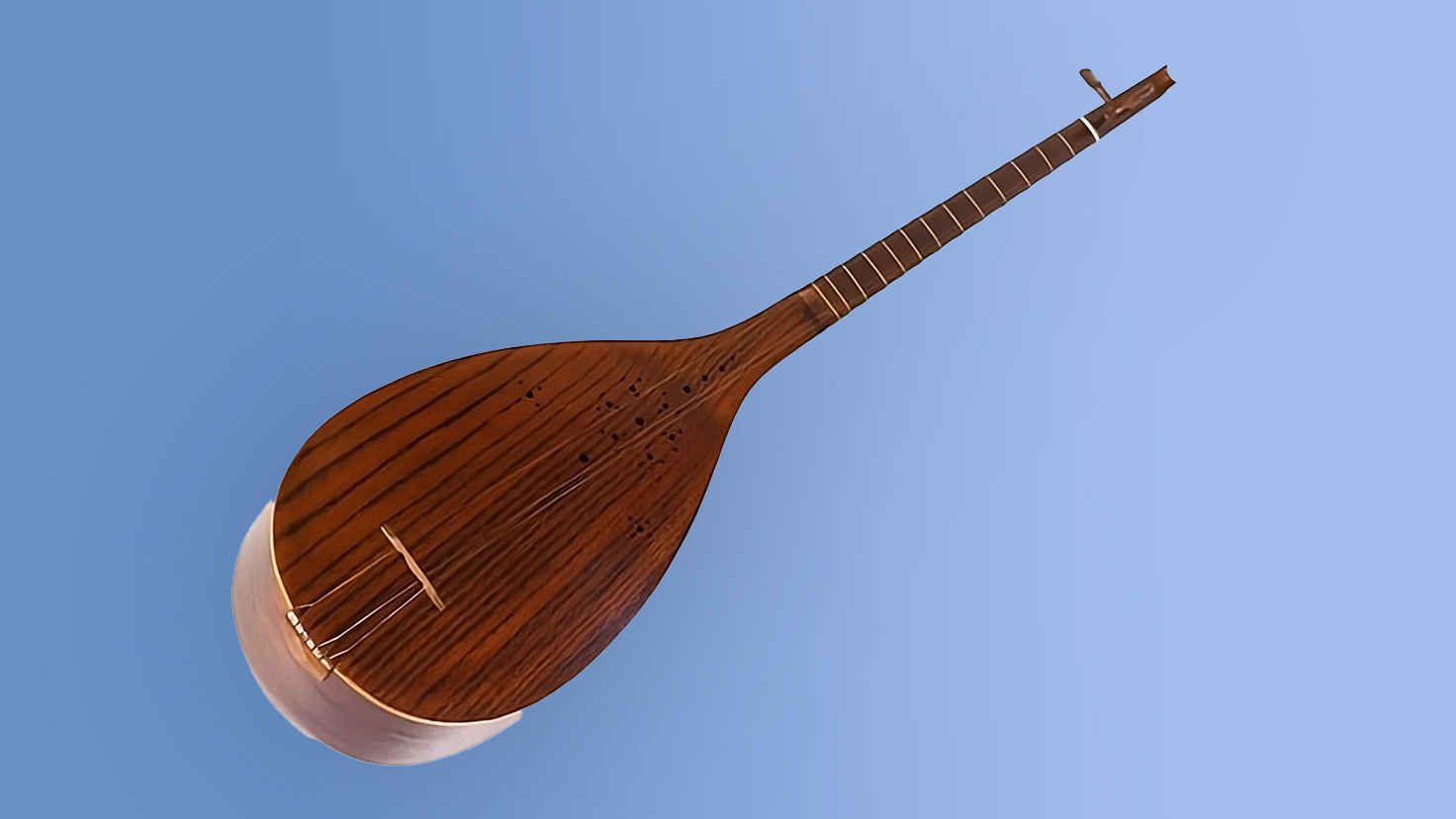
It is honored as the “king” of instruments. Although the head is small, the music range is quite wide, it plays the main role in “twelve mukams”.
Dombura
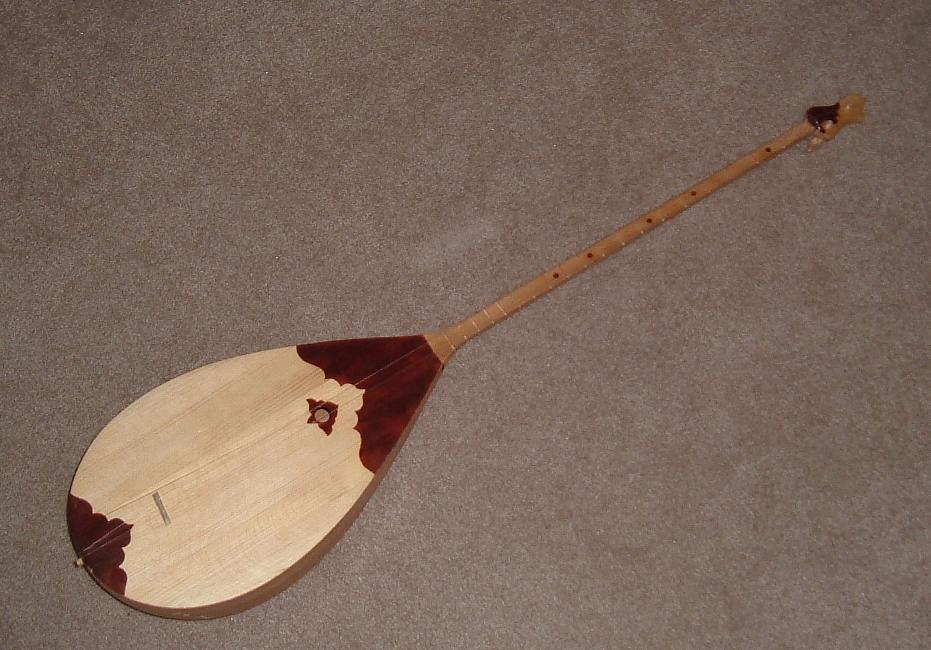
Dombura is a traditional and common musical instrument of Kazakh people.Nai (Flute)
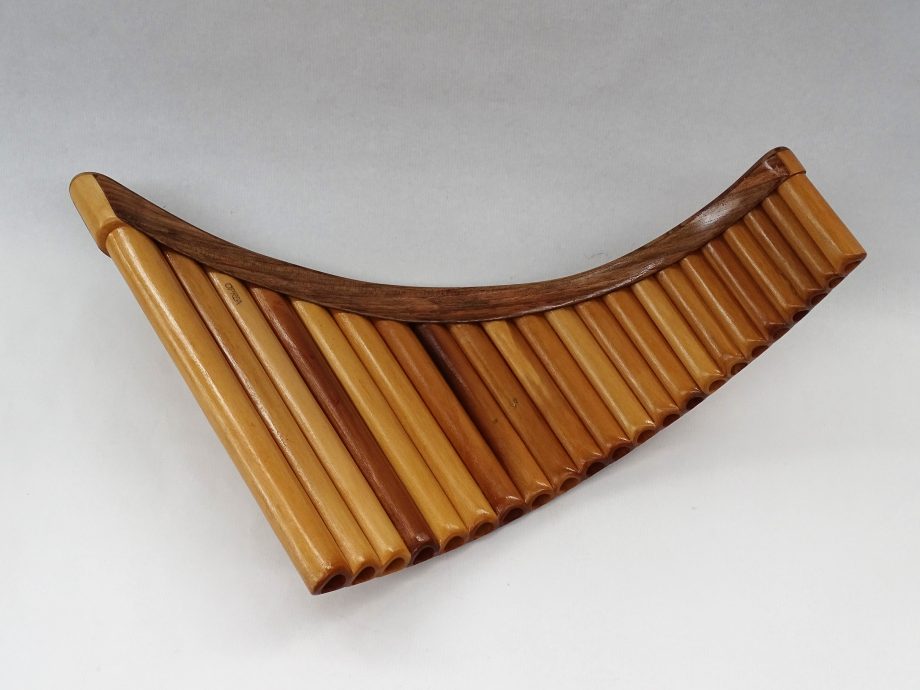
It is known that the ancient nai is made of animal bone with two & or three hole on the side. Nowadays nai is made of bamboo or Smetal.Those made of bone are usually about 20 cm long, and the 8 bamboo ones are about 40-50 cm long. The regular one has 8a
holes.It can be played alone or with an orchestra.
Surnai
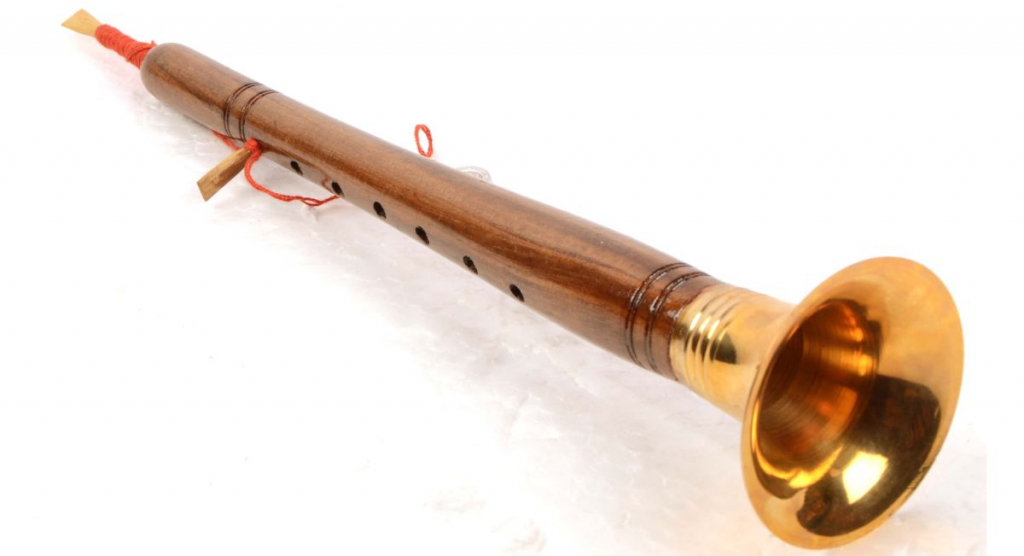
Surnai is an ancient woodwind instrument. The body part of it is usually made of apricot or jujube (Chinese date)wood. On its narrow end there is a reed,which can be replaced.The other end gets wider like a horn. Usual size of it is 43 cm,the diameter of the open end is 8 cm. It is used with naghra during festivals, wedding celebrations and other party gatherings.Dap
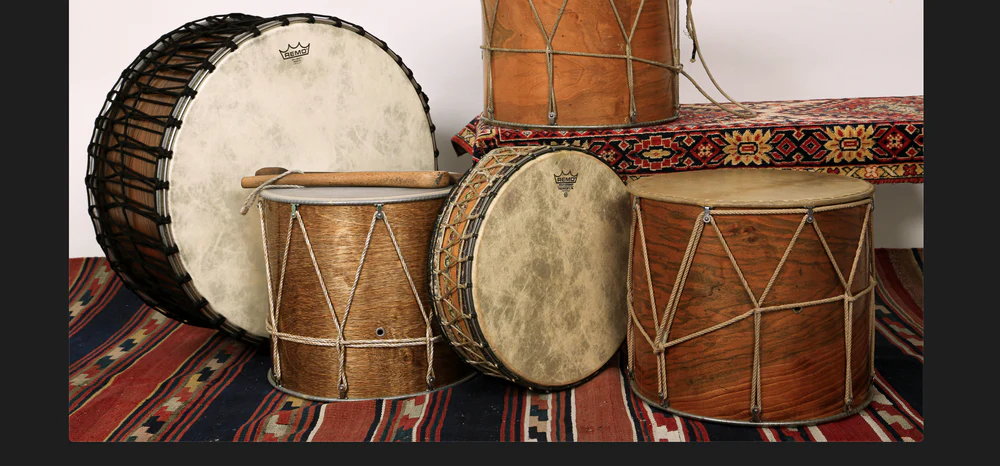
Dap is an important instrument of orchestra, it plays a leading role. It is an improved form of ancient percussion instruments. It is played by hitting on it by palm and fingers. The frame of dap is mainly made of mulberry wood. The drum is made of horse or of goat skin. Inside of the frame there are many metal rings,which make additional sound when dap is played. There are many different size daps,which are used in different occasions.The diameter of big dap is usually 42 cm, and the width of the frame is about 5 cm.